
Built to Turn Clinical Insight into Real‑World MedTech
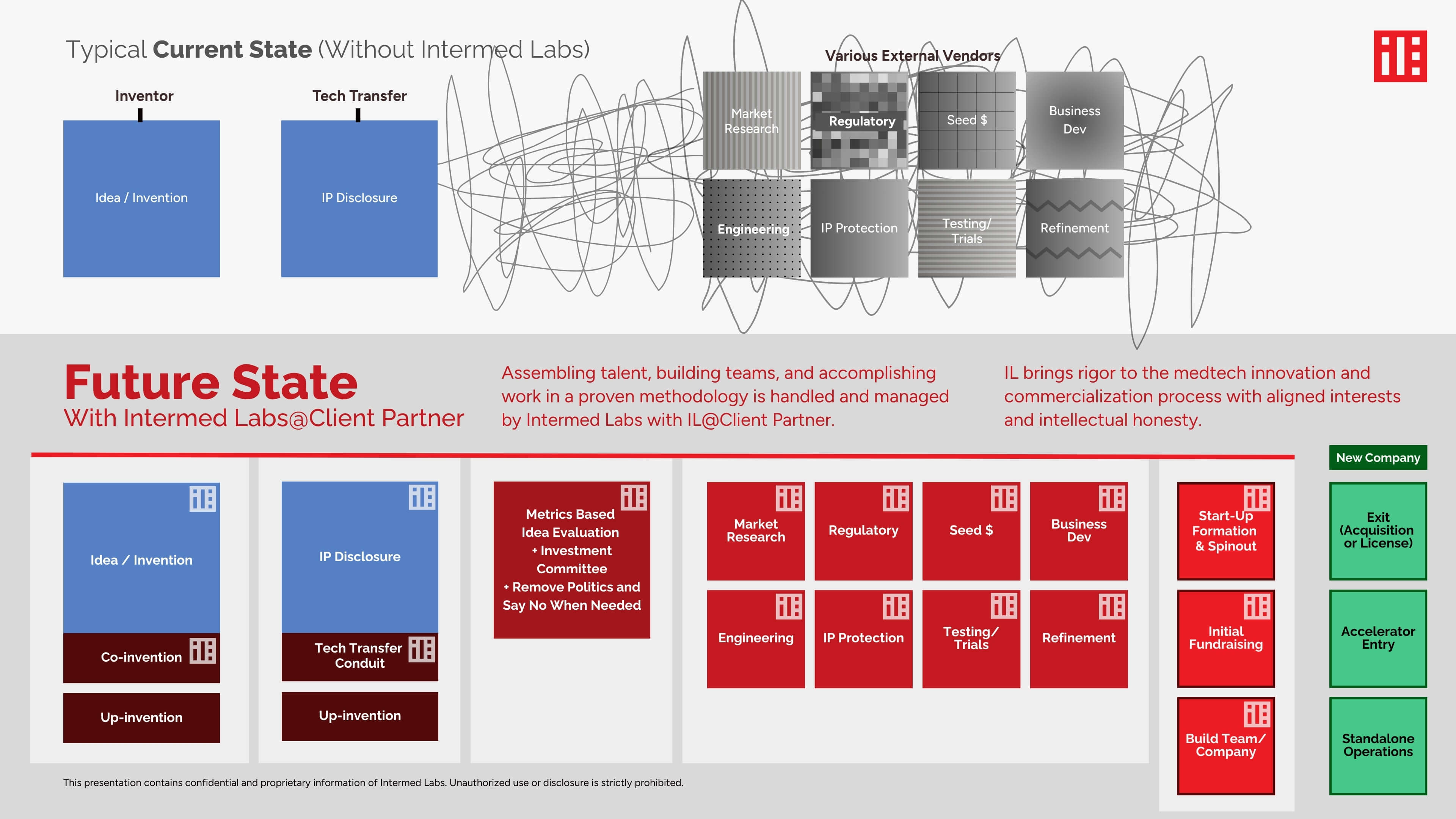
Intermed Labs is a plug-and-play, in-house medtech startup studio that partners directly with health systems to bring the best ideas to life. We work alongside hospital leaders, clinicians, and innovators within their ecosystems to identify unmet clinical needs and transform them into viable solutions.
Our team co-invests in promising ideas and supports every stage of development — from idea mining and up-invention to design, benchtop testing, and commercialization. We specialize in building Class I medical devices and digital health solutions, focusing on innovations that improve care delivery, patient outcomes, and operational efficiency.
By combining clinical insight, technical expertise, and shared investment, we don’t just advise, we build together.
How We Work
Our culture is defined by responsibility, rigor, and respect for complexity. We take healthcare seriously, and we approach innovation with the same mindset clinicians bring to patient care.
Who We Partner With
We work with people who are serious about building in healthcare and open to collaboration. This includes:
Health systems seeking to support clinician‑led innovation
Clinicians with firsthand insight into unmet clinical needs
Founders building MedTech products in regulated markets
Strategic partners aligned with responsible commercialization
We are selective by design. Not every idea is a fit, and that clarity helps everyone move faster.

What We Look For
Strong partnerships usually share a few common traits:
A clearly defined clinical problem rooted in real‑world experience
Openness to validation, iteration, and feedback
Willingness to engage with regulatory and operational realities
Long‑term commitment to building responsibly
You do not need a polished pitch or a finished product. You do need a real problem worth solving.
WORK WITH US
How to Get Started
If you’re interested in working with Intermed Labs, use the contact or idea submission form to tell us:
The clinical problem you’re seeing The context in which it occurs What you’ve explored so far